
UPDATE
  • Home
  • Categories
    • Business and Economy
    • Community
    • Small Biz
    • Policy and Law
    • Real Estate
    • Modern Life
    • Explore the U.S
April 05.2026
1 Minute Read

Boost Leads Fast with SEO for Basement Waterproofing Contractors

Mike Ryan Reveals Why SEO for Basement Waterproofing Contractors is a Business Lifeline

If you’re in the home repair business—especially as a basement waterproofing contractor—you know that winning new leads is everything. In a world where homeowners and real estate professionals scramble for urgent solutions to water intrusion or foundation issues, SEO for basement waterproofing contractors is no longer optional. It’s your primary source of lifeblood leads in a market ruled by digital first impressions. Mike Ryan, founder of Drip Dry SEO, pulls back the curtain on why strategic SEO is not just a good idea, but mission-critical for any basement waterproofing pro aiming for long-term success and industry dominance.

“SEO for basement waterproofing contractors is the lifeline of their business, especially since so many leads come from emergency situations where homeowners urgently search online.” — Mike Ryan, Drip Dry SEO

Basement waterproofing contractor consulting with homeowners — SEO for basement waterproofing contractors in action

How Missing SEO Opportunities Can Cost You Clients in Today’s AI-Driven Search Landscape

The SEO landscape is shifting—rapidly. As Mike Ryan expertly points out, “AI and generative search are changing the way customers find basement waterproofing contractors. ” No longer is it enough just to have a website. If you don’t show up where people are searching—especially in AI-powered and local search results—you’re not even in the running. Being invisible means losing out on high-intent traffic, and in this field, every missed call can be a lost emergency job.

SEO for basement waterproofing contractors is now about making sure Google, Bing, and AI systems recognize your business as the most relevant and reliable option in your market. Mike Ryan of Drip Dry SEO warns that contractors who neglect their digital footprint today risk falling behind as customer discovery habits evolve. Those who remain invisible in local packs, AI summaries, and map results are giving ground to faster-moving competitors.

“If your business is invisible in AI-generated searches, you’re essentially losing clients and critical revenue.” — Mike Ryan, Drip Dry SEO

Mastering the Customer Journey: The Key to Superior SEO Outcomes for Basement Waterproofing Contractors

According to Mike Ryan, success with SEO for basement waterproofing contractors goes beyond ranking for the word “emergency repair. ” It’s about understanding every stage of the customer’s journey—from the first drip or crack, through research phases, to the final call for help. “Knowing what questions customers ask at every step allows you to deliver answers that build trust and guide them towards your service,” Mike emphasizes.

This granular understanding allows contractors to anticipate search phrases like “why is my basement musty,” “how much does waterproofing cost,” or “best waterproofing solutions near me. ” By creating targeted content addressing these queries, you position your site as the go-to resource, nurturing leads long before an emergency strikes. As Mike Ryan puts it, recognizing these needs and intercepting searchers early is essential to converting even the most cautious of homeowners.

“Understanding the customer journey means catching them at every stage with answers to their questions, not just emergency repair calls.” — Mike Ryan, Drip Dry SEO

For a real-world perspective on how these strategies play out in the field, you might find it insightful to explore the exclusive interview with the owner of Bam Basements, where practical challenges and successes in basement waterproofing are discussed in depth.

Practical On-Page SEO Steps to Accelerate Lead Generation Now

So what can basement waterproofing contractors do right now to get more leads? Mike Ryan stresses the fundamentals—set up your site so both users and Google can instantly recognize your expertise and call you when the need arises. On-page SEO isn’t just a checklist; it’s the direct bridge between search visibility and your ringing phone. The essentials below are Mike’s front-line, high-ROI advice distilled from years of transforming contractor websites into lead-generating machines.

  • Optimize keyword placement in H1 and H2 tags focusing on SEO for basement waterproofing contractors
  • Ensure phone numbers and clear call-to-action buttons like ‘Call Now’ or ‘Get a Free Quote’ are prominently displayed
  • Align your Google My Business profile messaging to be congruent with your website for cohesive local SEO impact
  • Maintain updated and accurate phone numbers across all platforms, especially Google Maps

Ryan highlights these steps as the fastest route for searchers to become customers, emphasizing that, “An unclear CTA or hidden phone number can mean a missed lead at the exact moment a homeowner is ready to buy. ”
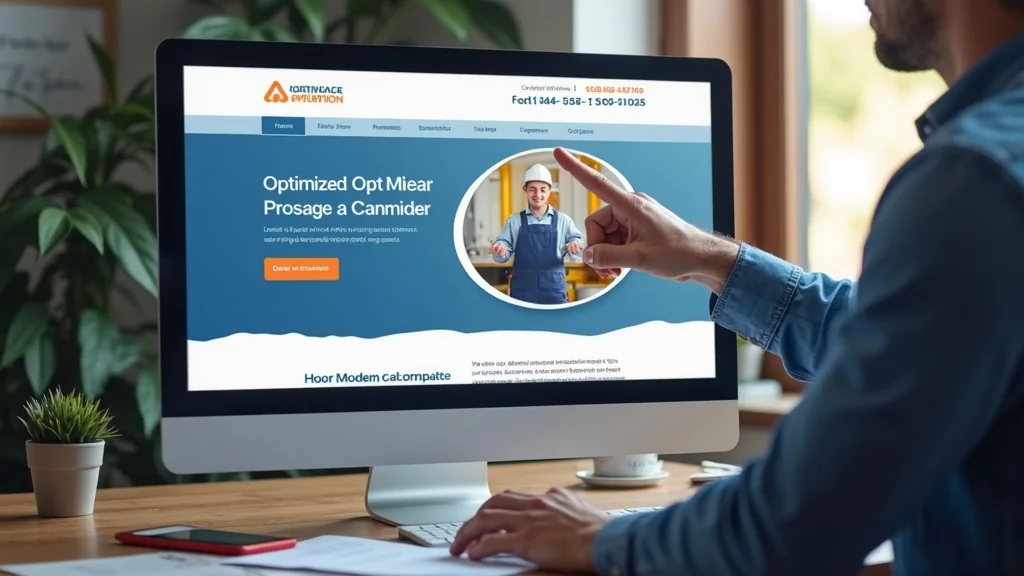
Optimized homepage for basement waterproofing contractor with clear SEO-driven CTA and phone number

Why Google Maps and Google My Business Dominate Lead Generation for Contractors

If there’s one channel basement waterproofing contractors can’t afford to ignore, it’s Google My Business—the heartbeat of local discovery. According to Mike Ryan, “Most leads come directly from the map. Homeowners and realtors are typing in ‘basement waterproofing near me’ and clicking on the mapped contractors who look credible, local, and immediately actionable. ” Consistency, clarity, and an up-to-date Google Business Profile mean you appear not just in web searches, but at the very top of local maps—right when it counts most.

This visibility isn’t accidental. Mike’s process ensures that business names, phone numbers, addresses, and service areas match everywhere online, eliminating confusion for both algorithms and customers. Strong reviews, tightly aligned services, and accurate NAP (Name, Address, Phone) data send conversion-ready leads straight to your phone. In the words of Mike Ryan, even minor mismatches can cost you, “because the map is where most of the leads are going to be coming from for basement waterproofing contractors. ”

Contractor using Google Maps and Google My Business — pivotal for SEO for basement waterproofing contractors

Leveraging Local SEO to Capture Ready-to-Act Homeowners and Real Estate Prospects

Local SEO is where urgency meets opportunity. When water starts seeping into a basement, homeowners and real estate agents are searching for solutions—fast. SEO for basement waterproofing contractors that is fine-tuned for local search makes you the contractor these high-intent users find and trust first. By optimizing location pages, service area content, and collecting Google reviews, contractors ensure they show up in the Google Maps 3-Pack and at the top of organic results just when their service is needed most.

Mike Ryan emphasizes that every local citation, review, and piece of content increases trust with both search engines and customers. “The more congruent and robust your presence is across Google, Yelp, business directories, and even social media,” he explains, “the more credible you look to a homeowner deciding in the moment who gets the job. ” For the contractor, this means a steady pipeline of warm leads from neighborhoods you serve—and a tangible edge over the competition.

Real estate agent and contractor partnership — trust in local SEO for basement waterproofing contractors

Building a Brand with Drip Dry SEO’s Data-Driven, Contractor-Focused Strategies

Success doesn’t stop at just showing up in search. Drip Dry SEO deploys a proven, data-driven mix of digital tactics to cement your business as the local authority in basement waterproofing. As Mike Ryan highlights, combining technical SEO, targeted content, PPC, and social media creates compounding returns—more calls, higher conversions, and lasting brand equity. Each action is customized, ensuring contractors are not only found, but chosen by the right clients.

  1. Targeted local SEO to boost visibility in hyper-local searches
  2. Tailored content marketing establishing contractor authority in basement waterproofing
  3. Integrated PPC campaigns generating immediate qualified traffic
  4. Social media engagement building trusted community reputations
  5. Professional web design converting visitors into actionable leads

According to Mike Ryan, these strategies work because they tap into both urgency and trust—turning every digital touchpoint into a direct pipeline for new business. Contractors working with Drip Dry SEO report measurable lead growth, improved rankings, and a lasting reputation that drives repeat referrals—a must for long-term local success.

Contractor analyzing growth from strategic SEO for basement waterproofing contractors

Key Takeaways: Transform Your Basement Waterproofing Business with Strategic SEO

  • SEO is vital, especially in emergency-driven service searches.
  • Understanding and mapping the customer journey improves lead capture rates.
  • On-page SEO and Google My Business optimization are immediate action items.
  • Consistency across online platforms drives trust and search ranking.
  • Partnering with niche experts like Drip Dry SEO maximizes ROI and growth.

Get Your Basement Waterproofing Business Found — Start Optimizing Today

The path to sustained lead generation, local dominance, and a resilient reputation begins with a commitment to smart digital strategy. As Mike Ryan’s expert experience with Drip Dry SEO shows, the right approach to SEO for basement waterproofing contractors puts you directly in front of real customers at their moment of greatest need. Action starts with optimizing the basics—on-page strategy, Google My Business, and consistent NAP—and evolves into a comprehensive local brand presence through content, reviews, PPC, and responsive web design. In this shifting digital world, those who act now outperform their competitors—so don’t let another search pass you by. Ready to transform your basement waterproofing business? Partner with Drip Dry SEO today and start capturing your market’s most valuable leads.

If you’re interested in seeing how other successful contractors have navigated the challenges of the basement waterproofing industry, take a look at this behind-the-scenes interview with the owner of Bam Basements. Their story offers valuable lessons and inspiration for contractors looking to elevate their business strategy and stand out in a competitive market.

Small Biz

0 Comments

Write A Comment

*
*
Please complete the captcha to submit your comment.
Related Posts All Posts
05.20.2026

Unlock Marketing Success: The Importance of Strategic Clarity

Update Understanding the Importance of Strategic Clarity Before Marketing Before diving into marketing strategies, founders must first achieve internal clarity about their business's current state. It's not enough to adopt trendy tactics like optimizing a website or launching a new social media campaign; the foundation must be solid. The core issue lies not in the marketing activities themselves, but rather in the founder's understanding of their business direction and what truly drives results. The 'Founder Portrait': A Tool for Clarity To build a solid marketing approach, founders should engage with four fundamental questions, known as the 'Founder Portrait'. These questions compel reflection on the business's true performance, habits that may be hindering success, actual profit sources, and personal goals. Only by answering these questions can one shed outdated practices and focus on what truly drives revenue. Identifying What's Working and What Isn't One of the most critical aspects of the Founder Portrait is understanding which aspects of the business are currently successful. This involves discerning between activities that generate revenue and those that are mere busywork. In many cases, founders struggle to articulate what is genuinely productive, leading them to repeat ineffective strategies while overlooking the root of their challenges. Eliminating Ineffective Practices Founders often cling to outmoded habits, whether they're tied to guilt, optimism, or long-standing traditions. Identifying these habits—such as unprofitable service lines or unfruitful customer segments—is essential for growth. Stopping these practices can create much-needed space in a business for innovation and development, as articulated in the recommendations by esteemed brand strategists. Aligning Business Decisions with Financial Realities Founders must analyze where their business generates income versus where they believe it does. It's all about backing up anecdotal evidence with concrete numbers. This requires a detailed look at revenue by segment and service to ensure business decisions align with actual performance. The Personal Element: What Do You Really Want? The final question in the Founder Portrait focuses on personal ambitions. Each founder has a unique vision for what success looks like—whether that's a thriving business, personal freedom, or an exit strategy. Clarifying this will ensure that the subsequent marketing strategies align with personal and business objectives. Integrating Clarity with Strategic Marketing Once clarity is achieved through the Founder Portrait, it is time to shift focus to marketing strategies built upon this solid foundation. Effective marketing flows from clear understanding, and without the groundwork done through internal reflection, any further marketing endeavors risk being misaligned or ineffective. Bridging Strategy with Brand Positioning As highlighted by industry experts, a powerful marketing strategy hinges on clear brand positioning. It's vital to define every aspect of how a business stands out from the competition and aligns with customer needs. When strategic clarity is prioritized, marketing efforts become more streamlined and effective—resulting in genuine growth and sustainability. A Call to Reflect Founders are encouraged to allocate an hour for deep reflection using the questions from the Founder Portrait. This practice isn’t merely an exercise; it’s a crucial first step in ensuring that any subsequent marketing strategies are strategically aligned and truly effective.

05.19.2026

Unlocking Customer Loyalty: How QR Codes Transform Loyalty Applications

Update Understanding Loyalty Applications: A Digital Revolution In today's fast-paced retail world, a loyalty application is more than just a trend; it's a tool that is reshaping the shopping experience for consumers everywhere. These apps eliminate the need for cumbersome physical cards, making it incredibly easy for users to manage their rewards and access exclusive offers directly from their smartphones. With features like QR code scanning, users can accumulate points in real-time, receiving immediate feedback on their spending habits and loyalty status. How Loyalty Applications Function A loyalty application operates through a straightforward, user-friendly interface that connects directly to the retailer's point-of-sale (POS) system. Customers earn points by scanning QR codes when they make purchases. This digital connectivity has revolutionized how consumers engage with brands, fostering a seamless shopping experience. Research indicates that 70% of consumers prefer managing their loyalty accounts via mobile apps, signaling a shift toward digital solutions for shopping and rewards. The Role of QR Codes in Enhancing Customer Experience QR codes play a pivotal role in loyalty applications, making the process of earning and redeeming rewards more efficient than ever. When a QR code is scanned at checkout, customers are not only credited for their purchases, but they also receive instant updates about their points balance. This immediate confirmation encourages repeat purchases and keeps customers engaged, ultimately leading to higher overall sales for retailers. Benefits of Loyalty Applications for Businesses The adoption of loyalty applications powered by QR codes offers retailers profound insights into customer behavior. Businesses can analyze data like purchasing trends, peak shopping times, and demographic engagement, allowing them to tailor their marketing strategies effectively. By understanding consumer preferences through real-time analytics, businesses can enhance their offerings and foster more robust customer relationships. Promoting Engagement and Loyalty Through Digital Solutions Beyond mere convenience, loyalty applications are about building a community around brands. Companies can implement gamification strategies, adding elements like challenges or bonus rewards that motivate customers to engage more deeply with the brand. For instance, users can earn rewards for reaching certain spending thresholds or completing in-app challenges, which leads to a more engaging and interactive shopping experience. Future Trends: The Evolution of Loyalty Programs As technology continues to evolve, so do the strategies businesses use to retain customers. The integration of loyalty applications and QR codes is only the beginning. Future trends indicate that loyalty programs will become even more personalized, leveraging artificial intelligence to predict customer behavior and tailor rewards accordingly. This proactive approach not only enhances customer satisfaction but also fortifies brand loyalty. Concluding Thoughts: The New Age of Customer Loyalty The landscape of customer loyalty is changing. With the emergence of loyalty applications powered by QR codes, businesses can engage customers in innovative ways that were previously unimaginable. As this transformation continues, companies that embrace these digital tools will likely see significant benefits in customer retention and satisfaction. To stay ahead in this loyalty-driven market, consider exploring how QR code loyalty programs can enhance your business strategy today.

05.18.2026

Partnership Tax Deductions Explained: Maximize Your Savings in 2026

Update Understanding the Landscape of Partnership Tax Deductions In light of the recent changes in tax legislation, particularly with the One Big Beautiful Bill Act (OBBBA), partnerships have found themselves with both challenges and opportunities when it comes to tax deductions. Partnerships, by their nature, are pass-through entities, meaning their income is not taxed at the business level but is reported on the partners’ individual tax returns. This unique structure presents various avenues for reducing taxable income through deductions, ultimately impacting financial outcomes for partners. Key Types of Deductions Partnerships Can Claim Partners can claim several kinds of deductions, including ordinary and necessary business expenses. According to IRS guidelines and carried through the recently updated tax frameworks, partnerships can deduct expenses such as: Advertising and Promotion: Costs related to marketing the business are considered essential and can be fully deducted. Business Meals: While only 50% of business meal costs may be deductible, establishments can still benefit from this allowance. Travel Expenses: Costs incurred during business travels are also deductible if they are directly tied to the partnership's business activities. Home Office Deductions: For partners working from home, it's crucial to ensure the home office is used exclusively for business to qualify for these deductions, which include a portion of utilities and rent. Professional Services: Fees paid for professional services such as legal advice or accounting services are also deductible when incurred for business purposes. Reimbursable vs. Unreimbursable Expenses: The Tax Code Untangled Understanding the difference between reimbursable and unreimbursable expenses is essential for partners looking to navigate their taxes effectively. Reimbursed expenses — those covered by the partnership — cannot be deducted on individual tax returns. Conversely, unreimbursed expenses are deductible provided they meet specific IRS criteria. These deductions become crucial, especially when the partnership agreement outlines who assumes responsibility for such costs. It ensures that partners maintain clarity on which expenses they can deduct, thus maximizing potential tax benefits. Documenting Deductions: An Essential Practice Proper documentation is vital for claiming deductions accurately and avoiding potential audits. Partners must maintain comprehensive records detailing all claimed expenses, including invoices, receipts, and logs of business-related activities. The IRS demands **substantiated documentation**, particularly for categories like home office deductions or business-related travel. This meticulous approach not only safeguards deductibility but also supports the partnership in organizing and justifying their financial dealings. Future Implications of the OBBBA on Partnership Deductions The OBBBA has ushered in substantial changes for partnerships, particularly in terms of the qualified business income (QBI) deduction, now a permanent feature. The updated deduction thresholds, now indexed for inflation, provide a smoother path for partners wishing to optimize their tax strategies over the coming years. The cap on state and local tax deductions (SALT) has also been raised, benefiting partnerships operating in higher tax states by allowing more deductible income. The intersection of these changes indicates that partnerships can effectively strategize their expenses and deductions through careful planning in 2026 and beyond. Practical Tips for Maximizing Tax Benefits With an eye towards optimizing tax benefits, partners should consider implementing several strategies before year-end: Consultation with a CPA: Engaging with a tax professional can help navigate the complexities of deductions and ensure compliance with IRS rules. Timely Documentation: Keeping organized records throughout the year rather than scrambling at tax time saves time and reduces stress. Strategic Timing of Expenses: Consider conducting large purchases or incurring expenses within the tax year to maximize deductions. Assessing Home Office Qualifications: Regularly revisit whether your home office setup meets IRS requirements to continue claiming deductions. By utilizing resources effectively, partnerships can significantly enhance their tax efficiency, taking full advantage of the benefits available under the current regulatory framework. Your Next Steps for Successful Partnership Tax Management As the tax landscape continues to evolve, it’s crucial for partners to stay informed and proactive in managing their finances. With the opportunities unleashed by new regulations and the potential for enhanced deductions, keeping in close contact with a tax expert can arm you with strategies that foster greater financial health for your partnership. Begin implementing these deductions effectively today to secure a stronger tax position tomorrow.

Terms of Service

Privacy Policy

Core Modal Title

Sorry, no results found

You Might Find These Articles Interesting

T
Please Check Your Email
We Will Be Following Up Shortly
*
*
*