

UPDATE
  • Home
  • Categories
    • Business and Economy
    • Community
    • Small Biz
    • Policy and Law
    • Real Estate
    • Modern Life
    • Explore the U.S
April 05.2026
1 Minute Read

Unlock the Magic of service retention strategies Today

Professional automotive service team—two skilled technicians efficiently collaborating in a modern express service bay, demonstrating effective service retention strategies.

Michael Barich’s Core Thesis: Prioritize Customer Convenience to Skyrocket Loyalty

“The biggest misconception dealers have is expecting customers to do business when it’s convenient for the dealer, not for the customer.”
– Michael Barich, The Fixed Ops Doc

For decades, many dealership service departments have operated under a deeply ingrained myth: that customers should adapt to the dealer’s schedule and processes if they want their vehicle serviced. Michael Barich of The Fixed Ops Doc, a frontrunner in service retention strategies, directly challenges this conventional wisdom. Drawing on extensive experience transforming fixed ops environments, Barich contends that this approach doesn’t just stifle customer satisfaction—it actively repels loyalty and repeat business.

According to Barich, genuine loyalty is sparked when a dealership designs every touchpoint around the customer’s convenience, rather than the dealership’s tradition or routine. He asserts that respecting customer time isn’t just a courtesy—it’s the foundation of any truly effective service retention strategy. For leaders across the automotive industry, this marks a paradigm shift: the roadmap to repeat business and advocacy isn’t paved by the dealership’s comfort, but by exceeding customer expectations.

Efficiency & Respect: The Twin Engines Driving Effective Service Retention Strategies

Why Speed and Respect for Time Are Non-Negotiable for Customer Loyalty

Customer booking car service efficiently using a modern digital scheduling interface—a pillar of service retention strategies optimizing customer convenience.
“We have to start respecting customers’ time and deliver timely service—an oil change and tire rotation should take 60 minutes or less consistently.”
– Michael Barich, The Fixed Ops Doc

According to Michael Barich, one of the gravest errors dealerships make is undervaluing the importance of efficiency. In today’s world, where nearly every consumer expects on-demand service, time truly equals trust. Barich emphasizes that even the most routine jobs—like oil changes and tire rotations—are critical opportunities to win or lose a customer’s loyalty. If these simple services spiral beyond an hour, customers view the dealership as out of touch.

Barich’s insights make it clear for fixed operations directors and service managers that discipline around time is not negotiable. Customers who experience prompt, predictable service are far more likely to remain loyal, return for future needs, and send referrals your way. The practical upshot: a culture of speed honors customers’ lives, removing friction and turning routine visits into opportunities for delight and repeat business. This laser-focus on both operational efficiency and consistency is an often-overlooked differentiator—but it’s a cornerstone of dominant service retention strategies that keep bays full and satisfaction high.

Case Study: Doubling Technicians to Triple Throughput Without Sacrificing Quality

“By converting to a two-man express maintenance team, dealerships can process three cars per hour with built-in redundancies ensuring quality.”
– Michael Barich, The Fixed Ops Doc

As Barich outlines, transformative service retention strategies require more than faster talk—they demand better processes. He details how a single operational pivot can deliver exponential results: shifting from one technician per stall to two. This express maintenance model doesn’t just speed up service; it also maintains quality thanks to integrated checks and balances at every step. Instead of allowing jobs to bottleneck, dealerships adopting this system can accelerate throughput to service three vehicles in the same timeframe it used to take for one—all without cutting corners.

The math speaks for itself. According to Barich’s expertise, implementing this change rapidly improves revenue per bay, keeps wait times low, and delivers satisfied customers back to the road—prompting a powerful cycle of trust and repeat visits. The secret? Each technician on the team has redundant quality control checkpoints, ensuring every car receives a thorough re-torque of lug nuts, drain plug inspections, and a reinspection of fluid levels. Dealerships ready to embrace this approach gain a signature competitive edge, with service department efficiency turning into measurable loyalty gains and higher profitability.

  • Express maintenance scheme explained: Using two technicians per stall
  • Quality control checkpoints: Re-torque lug nuts, check drain plugs, reinspect fluid levels
  • Mathematical ROI proof: Tripling throughput versus traditional single-technician service
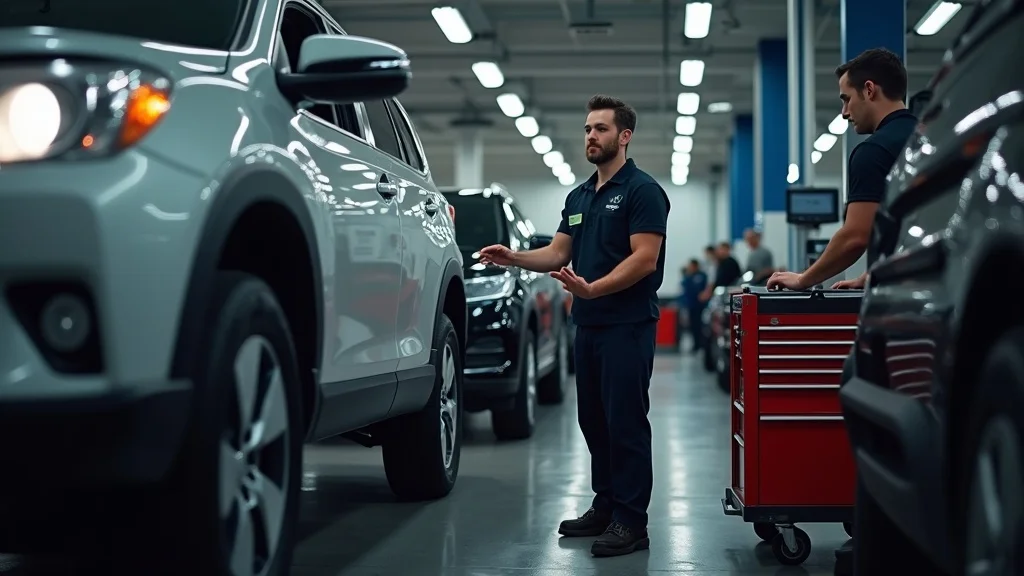
Express service team ensuring quality control, exemplifying efficient service retention strategies in an automotive dealership service bay.

Key Takeaway for Dealerships: Transparency and Time Respect are Loyalty Catalysts

“Be transparent and have a tremendous emphasis on respect for time if you want customers to come back again.”
– Michael Barich, The Fixed Ops Doc

Michael Barich’s consultancy experience proves that transparency and respect for time aren’t just important—they’re non-negotiable for building repeat business. When dealerships clearly communicate service expectations, wait times, and pricing upfront, barriers break down. Customers immediately feel valued, understood, and empowered. According to Barich, integrating transparent communication with operational speed signals to clients that their needs come before any internal process.

For dealership leaders, this means empowering every team member—from advisors to techs—to champion speed and honest updates at every stage of the service visit. When staff respects both the customer’s time and intelligence, a foundation for long-term loyalty is laid. Barich reiterates that this isn’t just theory: it’s what separates thriving, high-retention dealerships from those perpetually struggling with churn and negative word-of-mouth. In essence, transparent excellence is a strategic asset that amplifies every other service retention strategy—and keeps the service drive busy all year long.

  1. Implement express service windows focused on customer convenience
  2. Train staff to emphasize speed and quality simultaneously
  3. Communicate clearly about service expectations and timelines

Satisfied dealership customer receiving keys from service advisor, illustrating successful service retention strategies and customer loyalty.

Avoiding Common Pitfalls: When Service Retention Strategies Fail

Even with good intentions, many dealerships fall into subtle but fatal traps when devising service retention strategies. According to Barich, one egregious pitfall is designing systems that prioritize dealership convenience over customer need—forcing customers to fit into rigid scheduling blocks rather than flexible windows. This detachment leads quickly to frustration, eroding loyalty and sending clients to more nimble competitors.

Barich also warns against underestimating just how much a drawn-out service appointment erodes perception. In the age where instant gratification is expected, a 90-minute wait for a basic procedure may feel like disrespect. Additionally, failing to calculate the return on investment from adopting efficient, express solutions means leaving revenue—and goodwill—on the table. To secure sustained growth, successful dealerships must continually audit their processes for hidden friction points and act proactively to resolve them, turning every visit into a loyalty-building event.

  • Forcing customers to adhere to dealership schedules
  • Ignoring the impact of lengthy service times on customer perception
  • Underestimating the ROI of efficient, express services

Frustrated automotive customer waiting in dealership lounge, highlighting pitfalls of poor service retention strategies.

Supporting Insights: Broader Benefits of Optimized Service Retention Strategies

  • Strengthens long-term customer relationships: Consistent efficiency and open communication nurture trust and encourage loyalty across the ownership lifecycle.
  • Enhances profitability through repeat business: Satisfied clients not only return—they spend more over time with dealerships that respect their needs.
  • Positions dealership as customer-centric and competitive: Word-of-mouth, high satisfaction scores, and digital reviews propel brands with elite retention strategies far ahead of the competition.

According to Michael Barich, these knock-on benefits compound as dealership leaders shift from transactional mindsets to relationship-driven cultures. In the data-driven world of 2026, measurable customer retention is a direct indicator of fixed operations success, feeding both bottom-line growth and sustainable market share.

Final Thoughts: Service Retention as the Cornerstone of Fixed Operations Success

Confident fixed operations team reviewing performance metrics—service retention strategies as foundation for dealership success.

Michael Barich of The Fixed Ops Doc reminds dealership leaders that by reframing service retention strategies with a laser focus on customer convenience and operational efficiency, dealerships unlock loyalty and revenue growth. This strategic shift transforms service departments into powerful profit centers driving dealership-wide success.

Take the Next Step

For in-depth strategies tailored to your dealership's fixed operations, expert consulting is just a call or click away. Visit The Fixed Ops Doc online or call (708) 744-5425 now to transform your service retention strategies and solidify your dealership’s future.

Business and Economy

0 Comments

Write A Comment

*
*
Please complete the captcha to submit your comment.
Related Posts All Posts
05.19.2026

Unlock Financial Growth: How Collaborative Budgeting Tripled Revenue

Update The Power of Collaborative Budgeting: Transforming Financial DecisionsBudgeting, once a daunting and often contentious process confined to executive offices, is undergoing a substantial change. A shift towards collaborative budgeting empowers teams across an organization, enabling them to have a voice in financial planning. In a recent article, a successful entrepreneur shared their experience of nearly tripling revenue by moving from a control-centric mindset to one of collaboration. This change not only enhanced financial outcomes but also fostered a culture of teamwork.Understanding Collaborative BudgetingCollaborative budgeting encourages input from various departments, breaking down traditional silos. Instead of imposing budgets from the top-down, this approach allows for shared ownership. Stakeholders closer to the operational realities contribute insights, which significantly improves budget accuracy. Research shows that organizations embracing collaborative budgeting see increased forecast accuracy and faster approval cycles. For instance, companies report a 23% increase in forecast accuracy and a 40% acceleration in approval timelines compared to traditional methods.Benefits That Extend Beyond FinancesThe benefits of collaborative budgeting are profound. Employees who actively participate in creating budgets often feel more committed and engaged. When team members contribute to financial discussions, they gain a sense of agency and ownership over decisions, leading to heightened motivation and productivity. It also bridges gaps in financial literacy, as departments understand how their budgets impact the company's bottom line. This alignment nurtures a culture of accountability, where teams work collaboratively rather than evading constraints.Implementation Steps for SuccessTo implement collaborative budgeting effectively, organizations can follow a structured approach. First, set clear guidelines and objectives to align departmental goals with corporate strategy. Next, involve representatives from various departments to ensure inclusivity in the budgeting process. Communication is essential on this journey; so a documented plan outlining timelines and responsibilities helps keep everyone on track. This structured collaboration ultimately leads to better financial decisions.Real-World Applications: Success StoriesThe practical implications of collaborative budgeting can be seen in diverse sectors. A mid-sized healthcare organization dramatically reduced its budgeting cycle from 14 weeks to just 6 by adopting collaborative methods. In another example, a technology company aligned product features with budget allocations, leading to a 34% improvement in budget accuracy. These success stories highlight that when teams work together, they not only create efficient budgets but also foster innovation that drives organizational growth.Looking Ahead: The Future of Collaborative BudgetingAs businesses navigate increasingly complex financial landscapes, mastering collaborative budgeting will be vital. This method aligns with contemporary workforce expectations, emphasizing transparency and inclusion in financial planning. The organizations that successfully adopt collaborative budgeting will likely have a competitive edge in responsiveness and agility. Looking forward, these adaptable budgeting methods will shape how companies prepare for future challenges and opportunities.Take the First Step Towards Collaborative BudgetingIf you're looking to revamp your budgeting approach, consider starting with a pilot program in one department. By utilizing the steps laid out in this article, you can engage your teams in financial planning and unlock new potential for your organization. The best time to implement change was last year; the second-best time is now!

05.19.2026

Mango's Jonathan Andic Arrested: The Unfolding Mystery of His Father's Death

Update The Allegations Surrounding Isak Andic's Death The recent arrest of Jonathan Andic, son of the late Mango founder Isak Andic, has sparked a media frenzy as he faces accusations of homicide following his father's tragic fall from a cliff in December 2024. The incident, initially deemed an accident, is now being re-evaluated by authorities, leading to Jonathan's questioning and legal proceedings that reveal intricate family dynamics and potential motives. Circumstances of the Fatal Fall Isak Andic tragically lost his life after plunging over 100 meters while hiking near the picturesque Montserrat mountain range in Catalonia. At 71 years old, he was not only the founder of the globally recognized fashion brand Mango but was also a significant figure in the business world with a net worth of $4.5 billion. His sudden death shook the industry and raised numerous questions about the circumstances surrounding it. Reports indicate that Jonathan was accompanying his father at the time of the accident, which initially appeared accidental. However, multiple factors have led investigators to reconsider this narrative, including inconsistencies in Jonathan's statements and indications of a strained relationship between father and son. Insights from the Investigation A judge in Barcelona has stated that the investigation is being treated as a homicide, citing evidence that suggests premeditation, a poor father-son relationship, and discrepancies in Jonathan's account of the day's events. Notably, the judge referenced an autopsy that virtually eliminated the possibility of a simple accident, such as slipping or stumbling. As the judicial process unfolds, Jonathan Andic has been released on bail of €1 million, prohibited from leaving the region, and must report weekly to the court. His family continues to stand by him, emphasizing their belief in his innocence and the necessity of due process. Public and Media Reaction The public response has been a mixture of shock, disbelief, and curiosity, as many grapple with the complexities of familial relationships when wealth and power come into play. Speculations regarding Jonathan's motivations and the dynamics of the Andic family have taken center stage, making this not just a legal battle, but a spectacle scrutinized by the public and media. Exploring The Wider Implications This case draws attention not only to personal tragedy but also to broader issues concerning inheritance, ambitions, and familial obligations. As entrepreneurs like Isak Andic leave behind vast empires, the stakes become significantly higher for surviving family members who navigate both the grief of loss and the complexities of business management. As the case progresses, many are left to ponder the emotional toll of such allegations—both on Jonathan, who maintains his father’s legacy, and the enduring memory of Isak Andic, a man who built Mango from the ground up into a global competitor against giants like Zara. Looking Ahead: What’s Next for Mango and the Family? While Jonathan Andic asserts his innocence, the implications of this accusation may ripple through the Mango brand and its operations. His sisters who share ownership in the business, along with CEO Toni Ruiz, face challenges as they try to steer the company forward amid such turmoil. Regardless of the outcome, this incident serves as a poignant reminder of the responsibilities that come with wealth and success, particularly within families where conflicts can arise when personal and financial interests intersect.

05.19.2026

The Modern Grocery Transformation in Rural America: What’s Next?

Update Understanding Rural Grocers: A Modern TransitionRural America has seen a slow but steady evolution in its shopping landscape. The era when communities relied on five-and-dime stores for everyday needs is gradually giving way to modern grocery chains and local markets, reflecting broader economic, social, and cultural shifts that impact these regions. Historically, small towns thrived on local general stores, but as urbanization gained momentum and economic priorities shifted, many of these stores have closed, leaving residents with fewer options for their grocery needs.The Economic Landscape ChangesRecent data indicates the closures of over 100 rural grocery stores in Kansas alone between 2008 and 2018, with a rise in popularity of dollar stores and supercenters, as reflected in the Kansas Healthy Foods Initiative. This shift has presented significant challenges for communities that rely on limited grocery options, often leading to food deserts where access to fresh produce and nutritious essentials is compromised. Many residents, forced to travel long distances for grocery shopping, are increasingly turning to supercenters or online platforms that may compromise the quality or diversity of their food choices.The Role of Community InvestmentsCommunity-driven initiatives are essential for revitalizing rural grocery stores. In Axtell, Kansas, a group of local residents came together to preserve their town's only grocery store, raising funds and leveraging government programs to adapt to changing consumer needs. This project exemplifies how solidarity and collaboration can help sustain local businesses, drawing attention to the importance of investing in community resources to foster resilience.Food Insecurity: A Growing ConcernFood insecurity rates in rural areas are concerning but vary across different communities. In Axtell's Marshall County, approximately 12.5% of residents reported food insecurity. This reality underscores the need for systemic solutions to improve access. Sustainable grocery options are vital not just for convenience but also for supporting local economies and combating long-term health issues related to inadequate nutrition.Insights from Appalachian CommunitiesIn different contexts, similar patterns emerge. An Appalachian community studied after losing its local grocery store saw significant changes in shopping habits and dietary intake, revealing the profound impact such closures have on local behaviors and health. Transitioning to larger chain stores or supercenters did improve access in terms of availability, but many items offered were less healthy choices, raising concerns about nutrition.Future Trends for Rural GrocersThe future of grocery shopping in rural America may hinge on the success of innovative approaches such as online grocery ordering or mobile markets that can bridge gaps in food accessibility. Programs aimed at supporting local grocery stores through grants and resources are vital, yet community support remains critical. A grocery store is not just a business; it often acts as a social hub, contributing to the fabric of rural life.Key Takeaways and ActionsAs communities continue to adapt to the changing landscape of grocery retail, the challenges of affording nutritious food remain extensive. Policymakers and consumers alike must advocate for local solutions that prioritize community health, sustainable farming, and equitable access to food.This article serves as a call to action to support local grocery initiatives. Engaging with community programs, advocating for policies that promote local food access, and choosing to shop within local markets can pave the way for healthier, more sustainable rural communities.

Terms of Service

Privacy Policy

Core Modal Title

Sorry, no results found

You Might Find These Articles Interesting

T
Please Check Your Email
We Will Be Following Up Shortly
*
*
*