
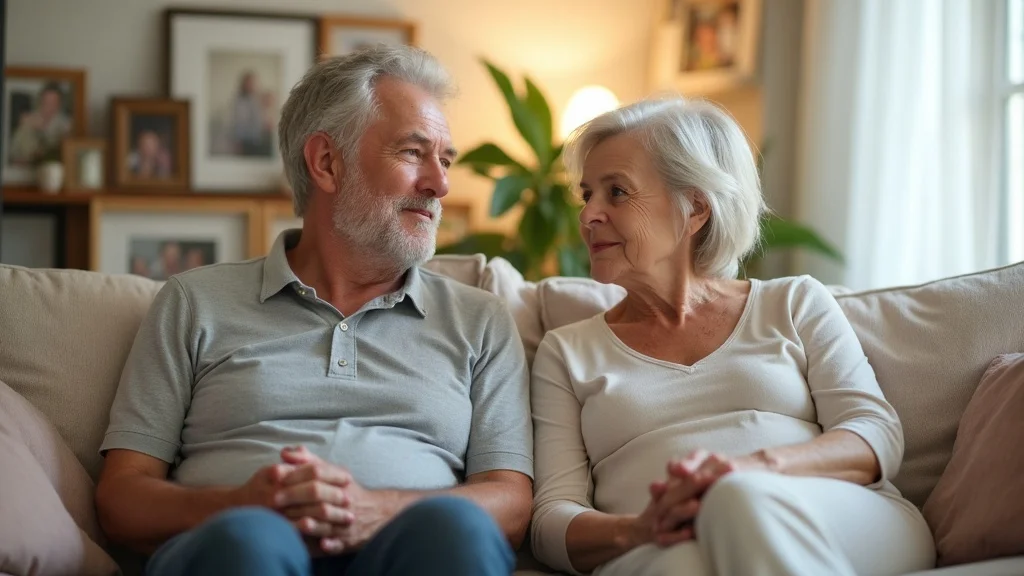
Imagine a couple, together for half a century, quietly sitting side by side in their living room. Their children are grown and gone; the house that once bustled with family now feels too quiet. Yet, beneath the calm exterior, these older couples are weighing a life-altering choice—to end their marriage. This scenario is no longer rare, which begs the question: what is gray divorce and why is it becoming a defining trend among America's older adults?
Understanding What Is Gray Divorce: A Modern Phenomenon for Older Couples
Gray divorce refers to the dissolution of marriages involving couples typically aged 50 and older—a demographic sometimes called “silver splitters. ” While divorce is often associated with younger generations, the past few decades have witnessed a sharp increase in separations among older adults. This trend, known as the graying of divorce, stands in contrast to the lower divorce rates now seen among younger couples. Many baby boomers, having spent a half century or more together, are re-evaluating their partnerships as they move into retirement.
What sets gray divorce apart from typical marital splits isn't just the age group involved, but the unique challenges it brings. Older couples considering divorce face higher stakes in asset division, adjustments in living standards, and ripple effects throughout family and legacy. As older adults approach their golden years with longer life expectancy and shifting social norms, the decision to end a long-standing marriage carries both risk and opportunity. Understanding these circumstances is critical for those navigating this complex transition.
What You'll Learn About Gray Divorce
The definition of what is gray divorce and how it differs from traditional divorce
Key reasons older adults pursue separation after decades together
Impact of gray divorce on financial security, mental health, and family legacy
Trends in gray divorce rates across the United States
Gray Divorce and the Graying of Divorce: Observing the Changing Landscape
The Emergence of Gray Divorce Among Older Adults
The phenomenon of gray divorces is not merely a statistical curiosity—it's reshaping expectations around aging, marriage, and autonomy. As the United States population grows older, and the baby boom generation continues to age, the number of older adults seeking divorce has noticeably risen. This shift is fueled by changes in societal attitudes: divorce no longer carries as much stigma as for previous generations, and older adults increasingly prioritize personal happiness over tradition.
The foundation of most marital biographies—loyalty, perseverance, and shared history—can be both a source of comfort and, ultimately, a catalyst for separation when personal growth feels constrained. Among the “aged and older” population, gray divorce not only reflects individual desires for fulfillment but echoes larger movements of independence and self-determination. For many, today’s retirement is less about winding down and more about opening up new chapters—sometimes without a long-time partner.
Half Century Partnerships and Their Unique Challenges
Couples who have been married for a half century or longer share an extraordinary bond—and, equally, face unique hurdles when reconsidering that commitment. Unlike younger adults, older couples often find that their lives have become deeply intertwined: financially, legally, and emotionally. While some take solace in routines built over 50 years, others find these routines no longer serve their evolving needs.
For older adults, gray divorce signifies more than just splitting assets. It entails the delicate process of untangling decades of investments, properties, and family traditions. In many cases, children are now adults themselves, and questions of inheritance, estate planning, and ongoing family relationships add additional layers of complexity. Not every couple is prepared for how divorce can shift family dynamics and reshape the legacy they've worked so hard to build.
Why Is Gray Divorce On the Rise Among Older Couples?
The Empty Nest: Re-examining Long-Term Relationships
The empty nest syndrome is a pivotal point for many couples. After years of focusing on childrearing, parents often discover their relationships have evolved—or stagnated—in silence. When children move out, older adults are left facing each other and evaluating their connection without distractions. For some, this brings renewal; for others, it reveals deep-rooted differences that were long overshadowed by family responsibilities.
In fact, research shows that some of the very strengths that helped a couple persist through decades—dedication, self-sacrifice, and shared parenting—may become stressors in the absence of external obligations. As baby boomers become “empty nesters,” the desire to reclaim individual identity or seek happiness apart from the marriage only grows, propelling the gray divorce rate higher among this age group.
Increasing Life Expectancy and the New Frontier for Older Adults
Another crucial driver behind the rise in gray divorce is life expectancy. With Americans living longer, the “second act” of adulthood looks very different than in generations past. People over the age of 50 now routinely face the prospect of two or even three more decades of life after the traditional retirement age. For some older adults, staying in an unfulfilling or stagnant partnership feels less palatable when so much life—and potential for personal fulfillment—remains.
This longer lifespan invites not only hopes for adventure and meaningful pursuits, but also a sharper focus on quality of life and self-growth. The awareness that there may be time to cultivate new friendships, hobbies, or even relationships gives many aged and older adults the confidence to initiate a gray divorce—a choice that would have seemed out of reach for prior generations.
Financial Independence and Changing Social Expectations
The growing financial autonomy of older adults—especially women—has played a pivotal role in the rise of gray divorces. Many baby boomer women have built careers, acquired assets, and achieved a sense of security that allows them to consider life beyond traditional roles. This shift is bolstered by evolving social norms: individual happiness is now widely viewed as a legitimate goal, and communities are more accepting of divorce later in life.
Coupled with these personal and cultural changes are the lessons gleaned from observing younger generations, who are more likely to seek fulfillment and assert their needs in relationships. For older couples, the prospect of facing the future alone—or even as single people—feels less daunting than before. Financial independence, improved healthcare, and greater support for mental health foster the confidence necessary to make major life transitions, including ending a longstanding marriage.
Key Trends: Gray Divorce Rate in the United States
How the Divorce Rate Is Shifting Among Older Adults
The gray divorce rate has steadily climbed in the United States even as divorce rates among younger couples decline. This contrasting trend is particularly pronounced among the “baby boom” cohort, who are entering retirement at a rate that redefines norms surrounding marriage and aging. Although traditional wisdom once suggested a “lower divorce” likelihood after several decades of marriage, recent data reveals the opposite: the divorce rate for older adults is at an all-time high.
This growing rate underscores a crucial cultural transformation. Whereas earlier generations might have remained together out of obligation or habit, today’s older adults are less likely to endure unhappy partnerships simply for convention’s sake. The sustained increase in gray divorce is also notable for its potential economic impacts, as it often leads to a redistribution of wealth and assets accumulated over many decades.

Regional Variations in Gray Divorce Rates
The gray divorce rate is not uniform across the country. Regional factors—including local economies, cultural norms, and population density—play a role in shaping divorce trends for older couples. For example, states with larger retirement populations or more progressive attitudes toward divorce may report higher incidences of gray divorces.
Rural and urban differences, access to legal and financial resources, and proximity to support networks can also influence divorce rates for this age group. Understanding these regional variations is especially important for law firms specializing in high net worth divorce, like Leavitt Family Law, as it helps tailor guidance to each client’s unique circumstances and local environment.
Gray Divorce Rate Trends in the United States |
||
Year |
Percentage of Divorces Among Age 50+ |
Key Observations |
|---|---|---|
1990s |
Low |
Gray divorces relatively rare; social stigma high |
2000s |
Increasing |
Baby boomers age, societal views change, rates begin to rise |
2010s |
Significantly higher |
Gray divorce rate outpaces younger generations |
2020s |
Peak |
Gray divorce a mainstream phenomenon among older adults; rates stabilize but remain high |
Major Factors Driving Gray Divorces Today
Common Reasons Cited in Recent Gray Divorce Cases
When examining real-world cases, several factors consistently emerge for older adults who choose gray divorce. These include the impact of the empty nest, a renewed quest for personal fulfillment in later life, readiness for financial separation, and evolving mental health or emotional needs. Often, these shifts come as individuals reflect on decades spent prioritizing family or career over personal happiness.
For many, the catalyst is not a single major event, but a gradual accumulation of differences and unmet hopes. The desire to gain new experiences and rediscover a sense of self frequently outweighs the comfort of established routines. Others find that financial preparedness—such as a stable retirement fund or paid-off home—provides the sense of security needed to contemplate a new direction.

Grown children leaving home
Desire for personal fulfillment in later life
Financial readiness
Changes in mental health and emotional needs
The Unique Complexities of What Is Gray Divorce for High Net Worth Older Couples
Asset Division, Retirement, and Estate Planning
Gray divorces often entail dividing a lifetime’s worth of accumulated assets, which is especially complex for high net worth individuals. Older couples may have diverse holdings—real estate, investments, business interests, and retirement accounts. Navigating these financial intricacies is rarely straightforward. Issues such as the division of pension plans, social security benefits, and future estate planning must be handled with diligence and prudence.
At Leavitt Family Law, we frequently advise clients that untangling shared assets after a long marriage requires not only legal expertise but also sensitivity to legacy and future security. Properly planned, this process can help conserve wealth and ensure a smoother adjustment to post-divorce life. Asset protection, equitable distribution, and the continued funding of retirement goals are all critical focal points for older adults facing a gray divorce.

Complications With Business Ownership and Prenuptial Agreements
For many high net worth older adults, the stakes are raised by shared business interests or inherited family enterprises. Disentangling business equity can be particularly daunting, and prenuptial or postnuptial agreements, if present, add another layer of complexity. Even with prior agreements in place, the specifics of enforcing or renegotiating terms often require careful negotiation and, in some instances, litigation.
Estate planning demands special attention, especially when adult children, grandchildren, or blended family members are involved. Wills, trusts, and succession plans must be revisited so future generations’ financial interests remain protected without unduly complicating asset division. In our opinion, seeking an attorney with deep experience in such nuanced cases is not just smart—it’s essential.
“Many couples are not fully prepared for the financial intricacies of dividing assets built over a half century together.”
The Emotional and Mental Health Impact of Gray Divorce
Navigating Loneliness, Anxiety, and Identity in Older Adults
The emotional impact of gray divorce can manifest just as powerfully as its financial implications. Older adults may experience feelings of loneliness or anxiety after separating from a spouse who has long represented their main source of companionship and support. The quest for a renewed sense of identity becomes central during this period of transition, especially for those whose self-worth was tied to their role as partner or parent.
Studies show that mental health challenges, such as depression and isolation, are common in the immediate aftermath of a late-life divorce. However, many also find strength in rediscovering personal goals and making meaningful social connections. For older adults, seeking new environments—such as clubs, volunteer organizations, or travel groups—can provide both support and enrichment in the transition to single life.

Facing Social Stigma and Family Dynamics
Although society is becoming more accepting of gray divorces, some lingering stigma and family complications remain. Older adults navigating divorce may face questions or judgment from relatives, peers, and even adult children. Open discussion and support are essential in managing these stresses and building understanding across generations.
The process of explaining the decision to grown children, handling holiday changes, and adjusting family traditions can prove challenging. It is not unusual for adult children to struggle with the shift in family structure, sometimes leading to strained relationships or feelings of betrayal. In such situations, empathy and clear communication go a long way toward reconciling expectations and fostering healing for all involved.
Expert Insights on Navigating Gray Divorce
How Legal and Financial Advisors Help Older Couples
The complexities of gray divorce demand the input of lawyers, financial planners, and counselors who specialize in serving older adults with high net worth. At Leavitt Family Law, we know firsthand the value of assembling a trusted advisory team. Legal specialists can clarify asset division, ensure the validity of agreements, and manage transitions of power-of-attorney or other legal rights. Meanwhile, financial experts can help safeguard ongoing retirement plans, investments, and estate objectives.
The goal is always to minimize disruption and enable a secure, satisfying next chapter. For many clients, working with experienced advisors reduces both the emotional and practical stress of divorce. Having professionals who are attuned to the particular hazards—and opportunities—of gray divorce is critical in achieving the best possible outcome.

“The needs of older adults in gray divorce differ drastically—coordinating support from various experts is crucial.”
Smart Planning for a Gray Divorce: Preserving Wealth and Wellbeing
Protecting Retirement Accounts and Investments
When facing the dissolution of a long-term marriage, older adults must pay close attention to the protection of retirement assets. Properly structured settlements ensure both parties are fairly supported and that retirement accounts, pensions, and investments sustain their intended purposes. Decisions about how to split IRAs, 401(k)s, and real property can have lasting effects on long-term financial security and standard of living.
It is vital to work with professionals who understand not just state law, but the evolving landscape of asset division. Early, proactive planning enables smoother negotiations and helps minimize expensive or regretful errors. At Leavitt Family Law, our approach for high net worth clients emphasizes tailored solutions—preserving both legacy and independence through well-documented and thoughtful agreements.

Mental Health Support for Older Adults in Transition
The importance of mental health resources cannot be overstated in the context of gray divorce. Therapy, support groups, and even individual coaching are effective for managing emotional pain and promoting resilience. Building new routines, maintaining social ties, and seeking purposeful activities are powerful ways to counteract loneliness and anxiety.
For many older adults, mental health services are an essential component of the journey toward renewed wellbeing and confidence. Encouraging professional counseling for both separating partners—and their families—can create a supportive environment for healing and growth. Prioritizing emotional wellness ensures that this life transition becomes not just survivable, but ultimately empowering.
Rebuilding Life After Gray Divorce: New Beginnings
Contrary to outdated stereotypes, gray divorce doesn't have to signal the end of happiness or purpose. Many older adults report feeling rejuvenated and excited about exploring new opportunities, from travel and learning to forming new friendships or even romantic partnerships. Community programs, creative pursuits, and volunteer work all contribute to a robust, fulfilling post-divorce life.
At every stage, it’s important to remember: gray divorce is not the end—it’s a transition to a different but potentially rewarding phase. With the right planning, advice, and support, many people over the age of 50 find contentment—and even joy—after making this courageous change.

People Also Ask: Gray Divorce
Who initiates the grey divorce?
Recent patterns show women are increasingly initiating what is gray divorce, motivated by greater independence and shifting marital expectations among older adults.
Do people regret gray divorce?
Regret varies—some older adults find renewed happiness, while others struggle with loneliness or financial complexity post-divorce.
Is it better to get divorce before or after retirement?
Divorcing near or after retirement poses unique financial risks, including division of pension, investment, and estate assets for older adults.
Why do people get divorced after 40 years of marriage?
Reasons include personal growth, loss of shared life goals, empty nest, and changing social norms—factors explicitly tied to the rise in gray divorce.
Strategies for Older Couples Seeking a Gray Divorce
Working With a Specialist in High Net Worth Gray Divorces
For those with significant assets or complex family arrangements, selecting an attorney skilled in high net worth gray divorce is essential. Specialists can identify hidden pitfalls, accurately value business interests, and strike a careful balance between preservation of wealth and equitable division. At Leavitt Family Law, we advocate comprehensive planning as the core strategy—structured processes reduce risk and foster peace of mind.
Transparency and trusted expertise allow clients to confidently discuss sensitive topics like prenuptial agreements, real estate holdings, and long-term health care needs. High net worth cases demand bespoke solutions that generalist firms may simply not be equipped to handle, reinforcing the need for targeted representation for this unique demographic.
Importance of Transparent Communication and Legal Preparation
Clear communication—between spouses, with adult children, and most importantly, with legal advisors—is vital for a smooth transition during gray divorce. Open, honest discussions about future goals, needs, and concerns lay the foundation for effective legal preparation and help minimize misunderstandings or conflict down the road. In our view, preparation is key: the more thoroughly couples understand their financial and legal landscape, the better equipped they are to protect their interests and emotional wellbeing.
Legal preparation might include updating estate plans, beneficiary designations, and powers-of-attorney. At every step, professional guidance helps ensure nothing is overlooked, easing the journey for older adults making this significant change.
Key Takeaways for Navigating What Is Gray Divorce
Gray divorce is an increasingly prevalent reality for older couples in the United States
Unique emotional, financial, and legal challenges require specialized attention
Preparation and support are critical for a positive outcome after gray divorce
FAQs on What Is Gray Divorce and Older Couples
How common is gray divorce?
Gray divorce is more common than ever, with the divorce rate among adults aged 50 and older rising significantly over the past three decades, especially in the United States.
What special financial considerations do older adults face?
Older adults must navigate division of retirement accounts, investments, business interests, and estate plans. The process can affect social security benefits, standard of living, and multigenerational wealth.
Can adult children be emotionally impacted by gray divorce?
Absolutely. Even though children are grown, gray divorce can be emotionally complex, affecting family dynamics, holidays, and legacies. Open communication is crucial for healing.
How do courts handle asset division for long-term marriages?
Courts aim to ensure equitable division by considering the length of marriage, contribution of both spouses, and the value of assets accumulated during the partnership, particularly for marriages spanning several decades.
What’s the first step to take if considering gray divorce?
The first step is consulting an experienced family law attorney who understands the complexities faced by older adults, especially in high net worth or long-term marriages.
If You're Facing Gray Divorce, Legal Expertise Is Essential
Get in touch with Leavitt Family Law at https://leavittfamilylaw.com/contact/
Conclusion
Gray divorce is complex, but with the right support, preparation, and legal expertise, older adults can confidently pursue new beginnings, preserve their wellbeing, and protect their legacy. Call Leavitt Family Law at (702) 605-0065.






Write A Comment